

Croc-Apocalypse Now!
Or, Why No One Wants Boots on the Ground
AI slop is the talk of the town, but the proliferation of cushy footslop – derived from the workers’ clog and merged with high tech polymers – has already taken over global footwear, with nary a peep of protest. The Croc and its offspring, the Ugg slip-on, have taken over Gen Z feet. Strangely enough, neither Crocs nor Uggs are American inventions: Canadian and Australian respectively, they are children of the British Empire, whose fall they cushion with man made and natural products.
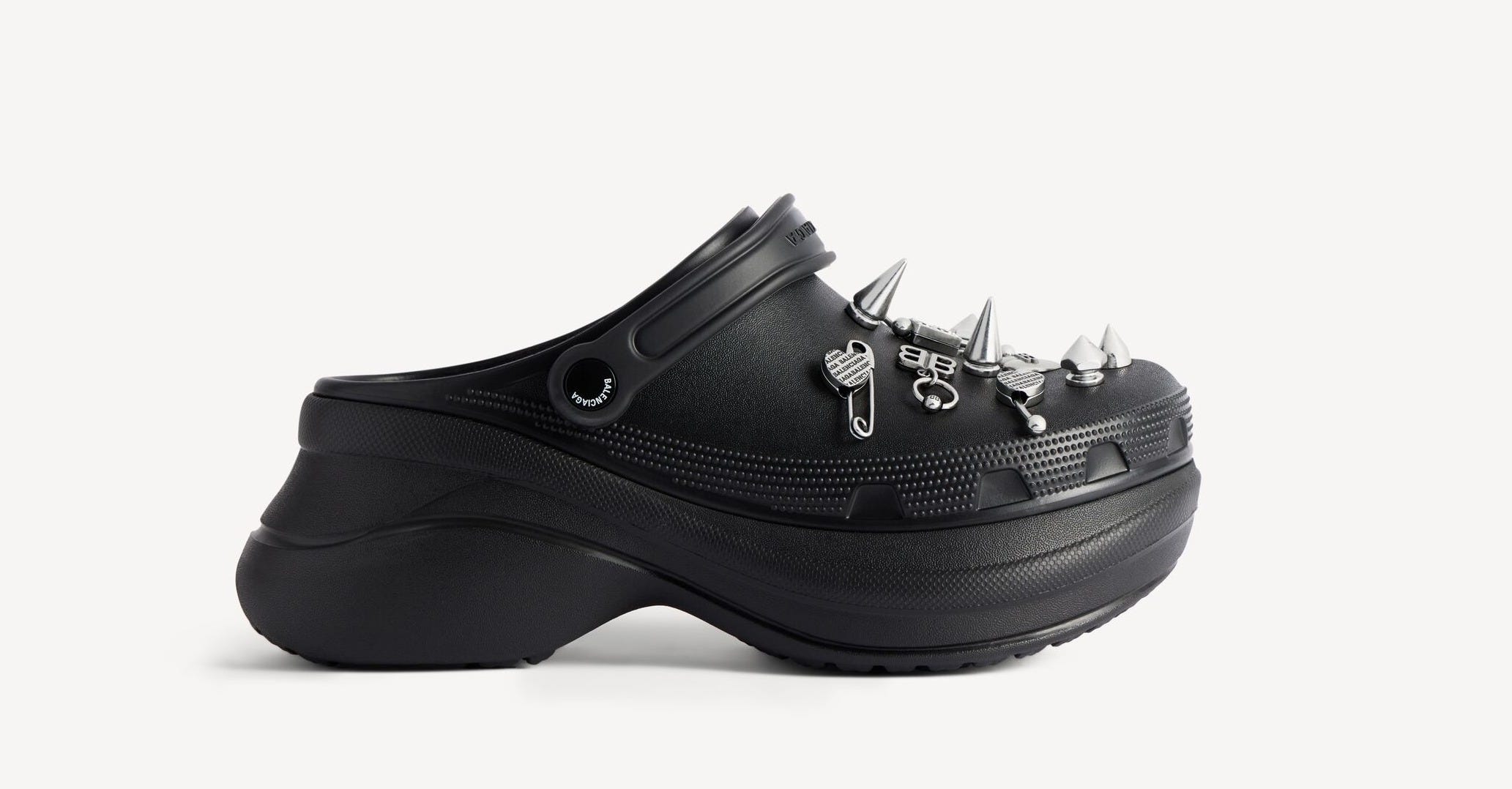
Before we get into what the Croc-Apocalypse means, let’s take a brief look at the history and politics of feet and foot coverings. Following a historical, materialist, psychoanalytic line of argument, feet and shoes have long functioned as fetishes: substitutes for the maternal phallus, or the compensatory coverups for the maternal lack of a penis. They have also been enduring objects of erotic obsession. Feet and shoes can be both soft and hard, articulating a difference and a connection between Marx and Freud’s theorization of fetishism. Feet arch and stiffen with both pleasure and pain; they change shape and consistency like the genitals. In youth, they are supple and plump. They become hardened and misshapen by labor, overuse, and despair.
Shoes protect feet. Once purely functional, the earliest known shoes were sandals found on Ice Age people. Woven out of straw or grasses, these foot coverings enabled our hunter-gatherer ancestors to survive and prosper by pursuing large prey, which provided the protein and fat needed for muscle development and energy. Without foot protection, it is easy to imagine our ancestors perishing during the Ice Age from frozen feet alone.
The gentler climates of river valleys and the cradles of early civilization may have temporarily obviated the need for survivalist footwear, but as human societies grew more stratified – marked by increasingly stark variations of wealth and power – shoes became one of the most visible signs of class distinction. Absolute monarchs embraced footwear that was meant for battle or leisure. The pointed toes of cloth and metal footwear sported by European feudal lords and ladies would never see a muddy field or puddle of blood.
Allegedly, French kings adopted the high heel from Persian horsemen, who used the heel not for sexy purposes, but to keep their feet and shoes in their stirrups during warfare. In China, elites practiced foot binding as early as the 10th century as a marker of female beauty: girls’ feet were broken at an early age and tightly bound with cloth to prevent them from growing to their full size. Initially a sign of prestige and cultural status, the practice was also adopted by poor families by the 16th century in order to make their daughters more marriageable. Peasant women, however, like my paternal grandmother, were still tasked with countless chores and domestic duties that they performed perched on hand made cloth shoes. The practice was finally banned with the founding of the first Chinese Republic.
